Remove a tooth
Tooth extraction
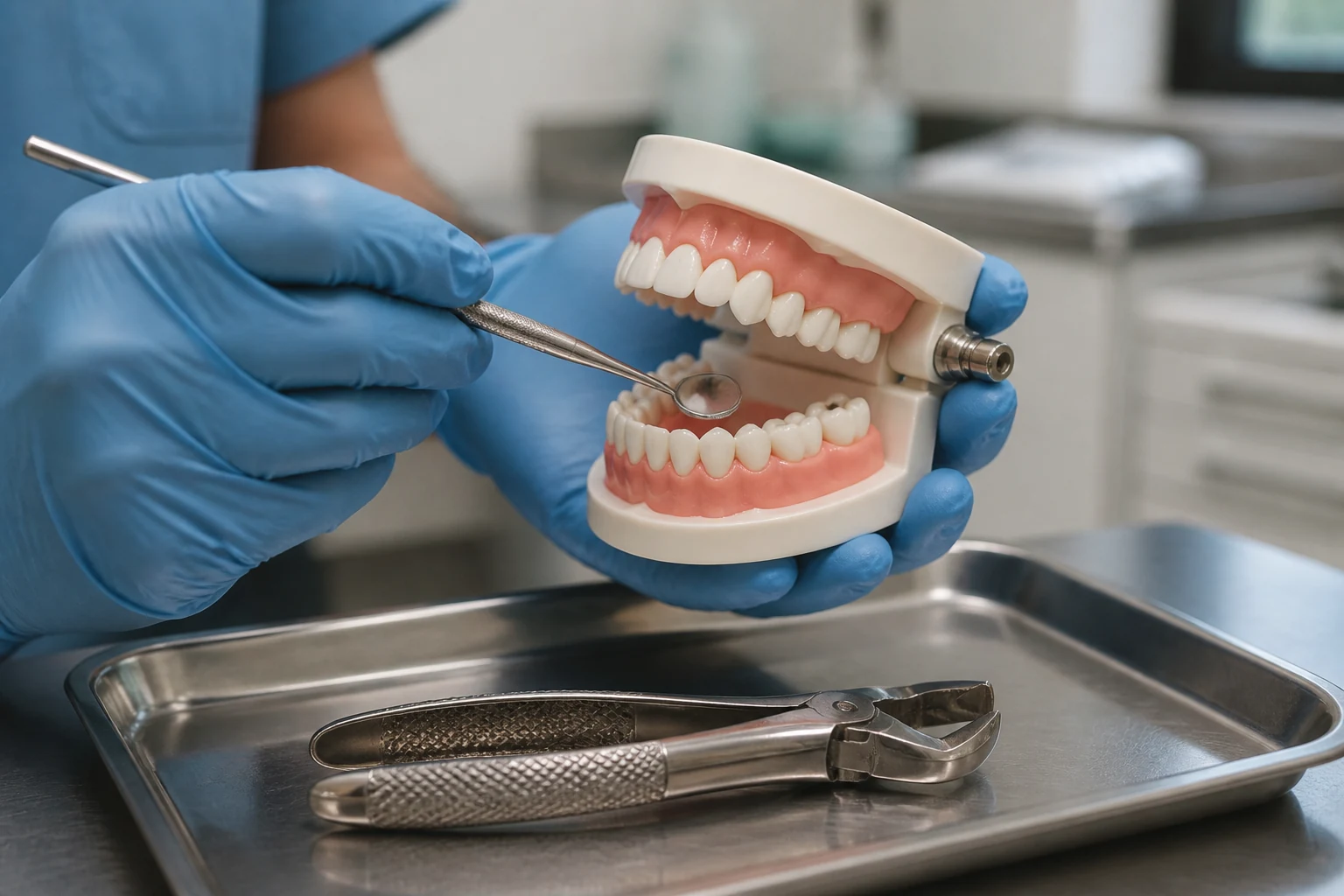
An extraction removes a tooth that cannot or should not be kept. The reason, alternatives and effect of the resulting gap should be discussed first where time allows.
General information only. A dentist needs to examine you before advising whether a treatment is suitable.
In plain language
What it is
Some teeth can be removed simply; others need a surgical approach. The position and condition of the tooth, its roots and nearby structures affect the plan.
Read a little more
Removing a tooth is irreversible. When the situation is not urgent, ask whether retaining the tooth is possible and whether the gap will need treatment.
A general outline
What usually happens
This is a typical sequence, not a promise of how 4GSS will plan a particular case.

Assess
The dentist reviews the tooth, your health and relevant imaging, then explains the proposed approach.
Remove
Local anaesthetic is normally used. Surgical removal may involve a small incision, sectioning the tooth or stitches.
Heal
You receive instructions for the socket. Bleeding, pain and swelling should reduce rather than worsen.
More detail when you need it
Things to consider before deciding
Open any section that is useful to you. The dentist can talk through these points at an appointment.
Points to discussLimits, alternatives and uncertainties
Points to discuss
- Bleeding, swelling, infection and delayed healing can occur. A painful dry socket is another recognised complication.
- Nerves and nearby teeth or restorations can be at risk in some locations.
- Seek prompt advice for uncontrolled bleeding, increasing swelling, severe worsening pain, breathing or swallowing difficulty, or feeling very unwell.
Questions to askThree useful prompts for your appointment
Questions to ask
- Can this tooth reasonably be retained?
- Is a simple or surgical extraction expected?
- What should I do if healing does not follow the expected pattern?
General information sourcesIndependent patient information
General information sources
These links explain treatments in general. They do not confirm which options 4GSS currently offers or what is appropriate for you.
Discuss this treatment with the practice
Request an assessment or call reception. The dentist can explain the findings, suitable options and current fees.