
Restore or replace
Crowns and bridges
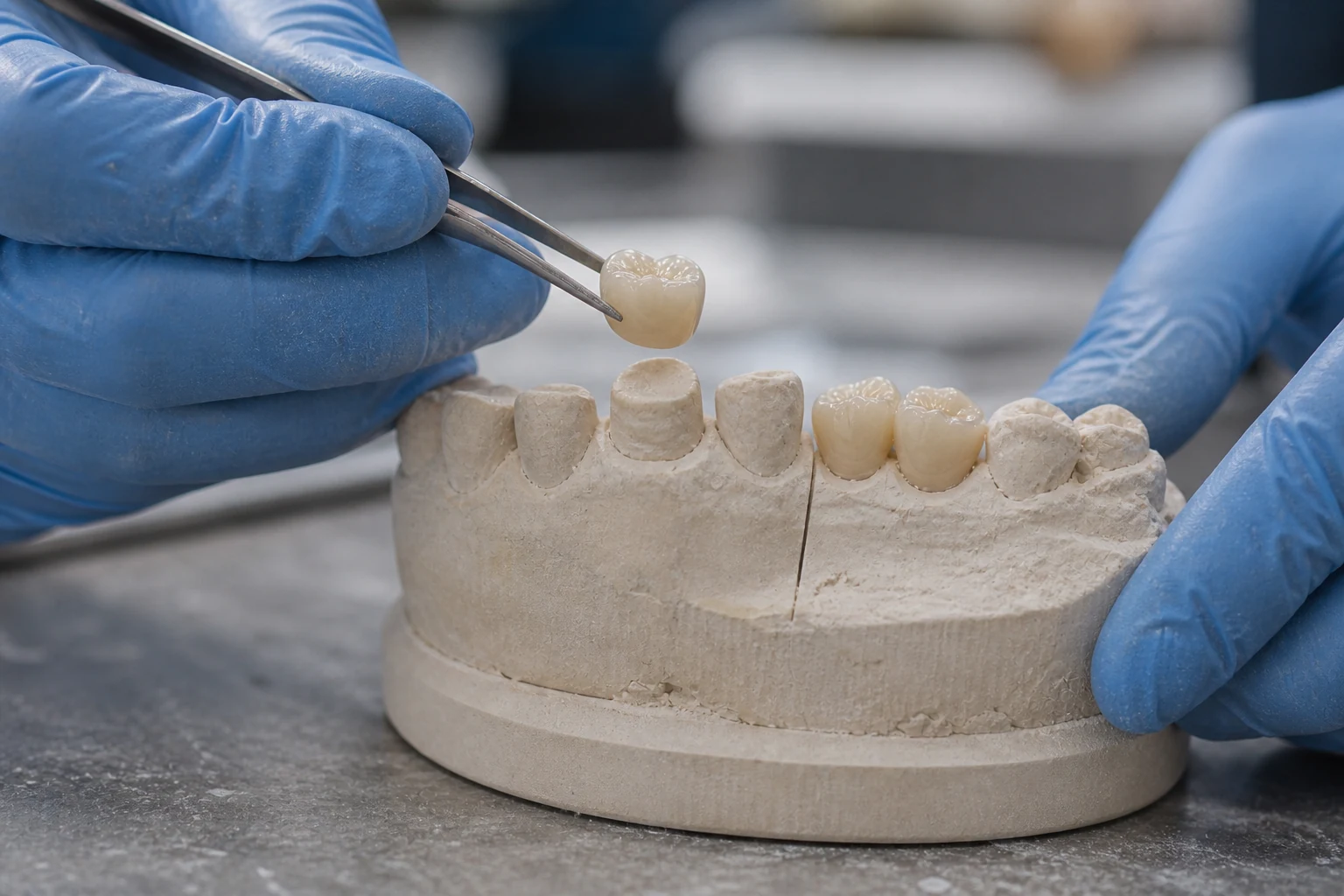
A crown covers a prepared tooth. A bridge replaces a missing tooth by connecting a replacement to supporting teeth or implants.
General information only. A dentist needs to examine you before advising whether a treatment is suitable.
In plain language
What it is
Crowns can be considered when a tooth needs more coverage than a direct filling can provide. Bridges are one option for a gap and rely on suitable support.
Read a little more
These treatments involve choices about design, material, tooth preparation and maintenance. The alternatives may include a filling, denture, implant treatment or accepting and monitoring a gap.
A general outline
What usually happens
This is a typical sequence, not a promise of how 4GSS will plan a particular case.
Plan
The dentist assesses the tooth or gap, explains suitable options and discusses what each would involve.
Prepare
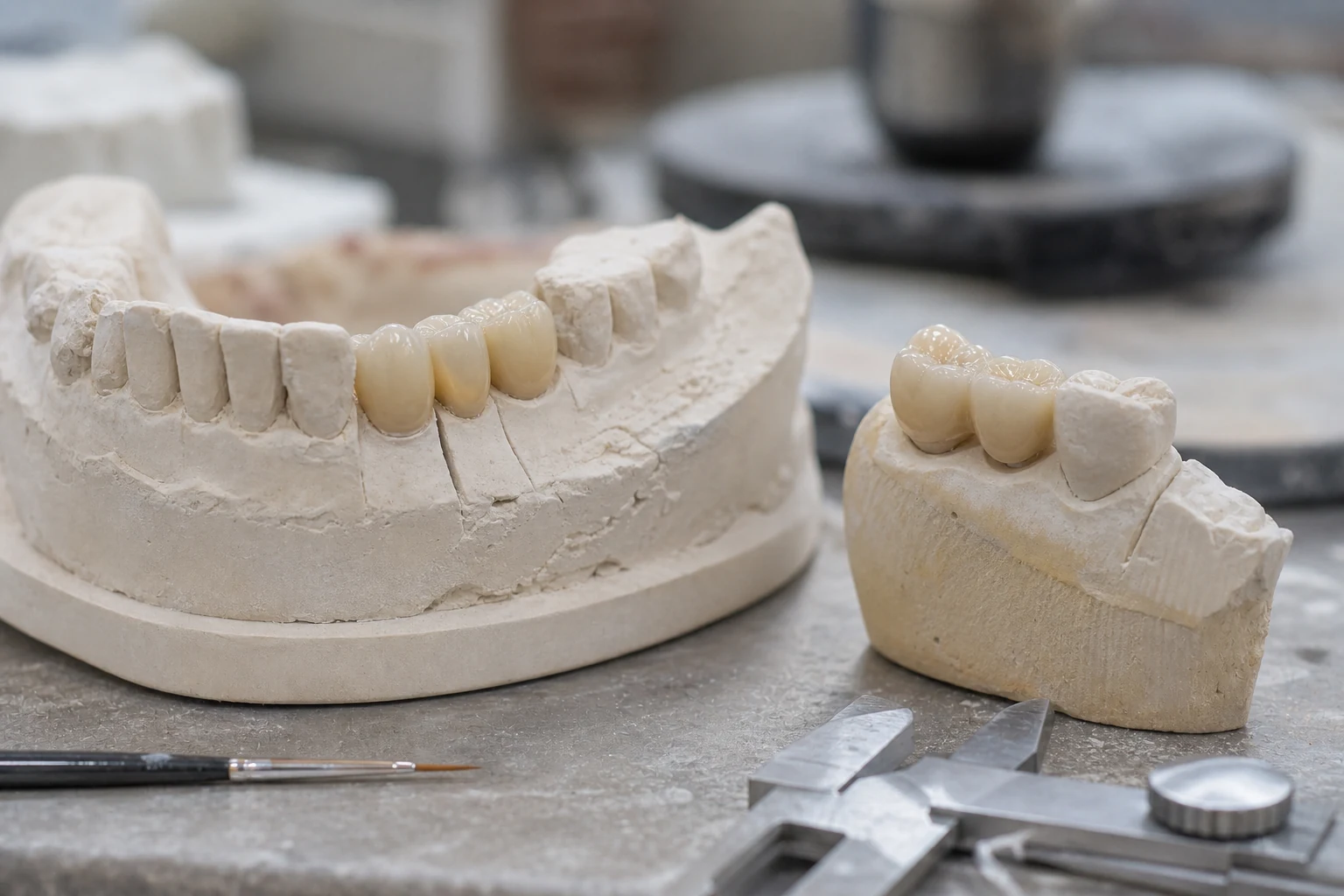
Supporting teeth may need preparation. Records or scans are taken, and a temporary restoration may be used.
Fit and review
The restoration is checked for fit, appearance and bite before it is secured. Cleaning and review advice follows.
More detail when you need it
Things to consider before deciding
Open any section that is useful to you. The dentist can talk through these points at an appointment.
Points to discussLimits, alternatives and uncertainties
Points to discuss
- Preparing a tooth removes some tooth tissue and may affect the nerve inside it.
- A bridge places cleaning demands around and beneath the replacement tooth.
- Crowns and bridges can chip, loosen or need replacement; their lifespan cannot be predicted for an individual.
Questions to askThree useful prompts for your appointment
Questions to ask
- Why is a crown or bridge preferred over the alternatives?
- How much tooth preparation is expected?
- How should I clean and maintain it?
General information sourcesIndependent patient information
General information sources
These links explain treatments in general. They do not confirm which options 4GSS currently offers or what is appropriate for you.
Discuss this treatment with the practice
Request an assessment or call reception. The dentist can explain the findings, suitable options and current fees.