Replace missing teeth
Dental implants
A dental implant is placed in the jaw to support a crown, bridge or denture. Treatment is surgical and usually involves assessment, healing and restoration stages.
General information only. A dentist needs to examine you before advising whether a treatment is suitable.
In plain language
What it is
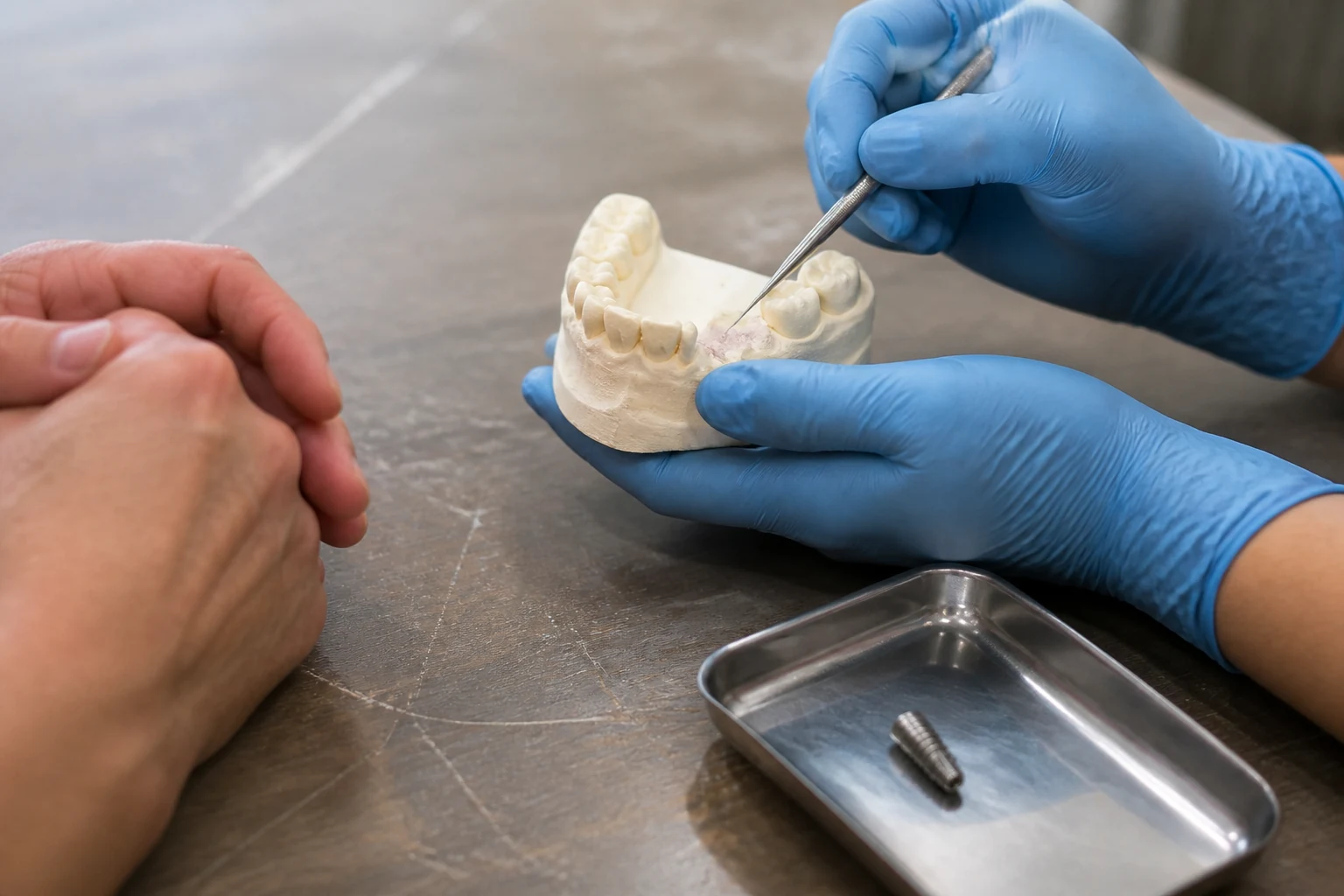
The implant acts as an artificial root. The visible replacement tooth or teeth attach to it after the clinical team judges the implant and tissues ready for the next stage.
Read a little more
Implants are not suitable for everyone. Bone, gum health, general health, medicines, smoking, cleaning and willingness to attend maintenance all affect the discussion.
A general outline
What usually happens
This is a typical sequence, not a promise of how 4GSS will plan a particular case.
Assess and plan
The mouth, gums and available bone are assessed. Imaging and records may be needed before options and costs can be discussed.
Place and heal
The implant is placed surgically. The site then needs time to heal, with timing based on the clinical situation.
Restore and maintain
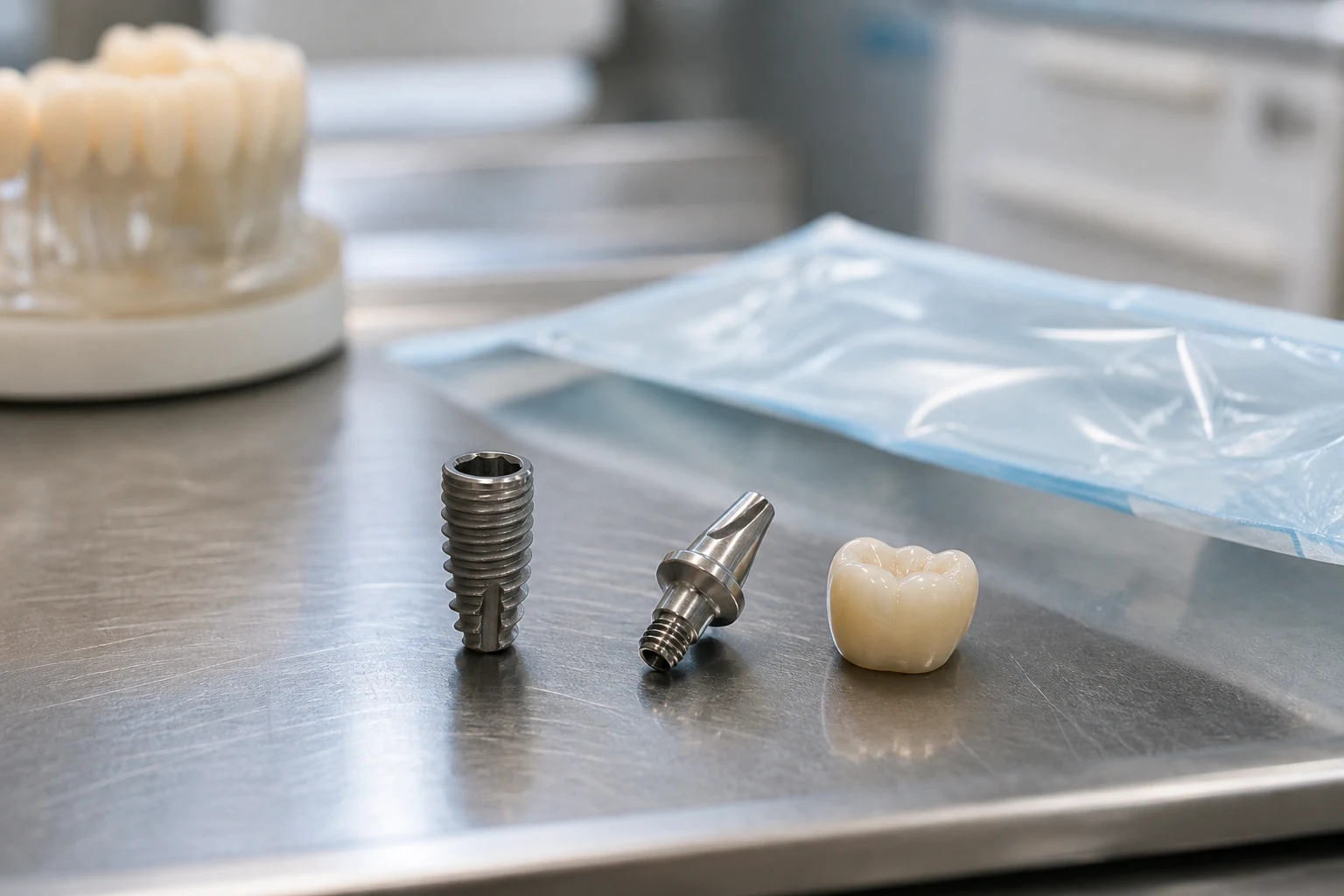
A crown, bridge or denture is made to connect to the implant. Long-term cleaning and review remain necessary.
See another explanatory view
More detail when you need it
Things to consider before deciding
Open any section that is useful to you. The dentist can talk through these points at an appointment.
Points to discussLimits, alternatives and uncertainties
Points to discuss
- Surgery carries risks including pain, swelling, infection and damage to nearby structures. The dentist must explain risks specific to the planned site.
- An implant may not integrate with the bone or can develop problems later. Success cannot be guaranteed.
- The full fee may involve planning, surgery, components, laboratory work, restoration and maintenance. Ask for a written breakdown.
Questions to askThree useful prompts for your appointment
Questions to ask
- What alternatives are suitable for this gap?
- What does the quoted fee include and exclude?
- What maintenance and future component replacement may be needed?
General information sourcesIndependent patient information
General information sources
These links explain treatments in general. They do not confirm which options 4GSS currently offers or what is appropriate for you.
Discuss this treatment with the practice
Request an assessment or call reception. The dentist can explain the findings, suitable options and current fees.