
Move teeth
Clear aligners
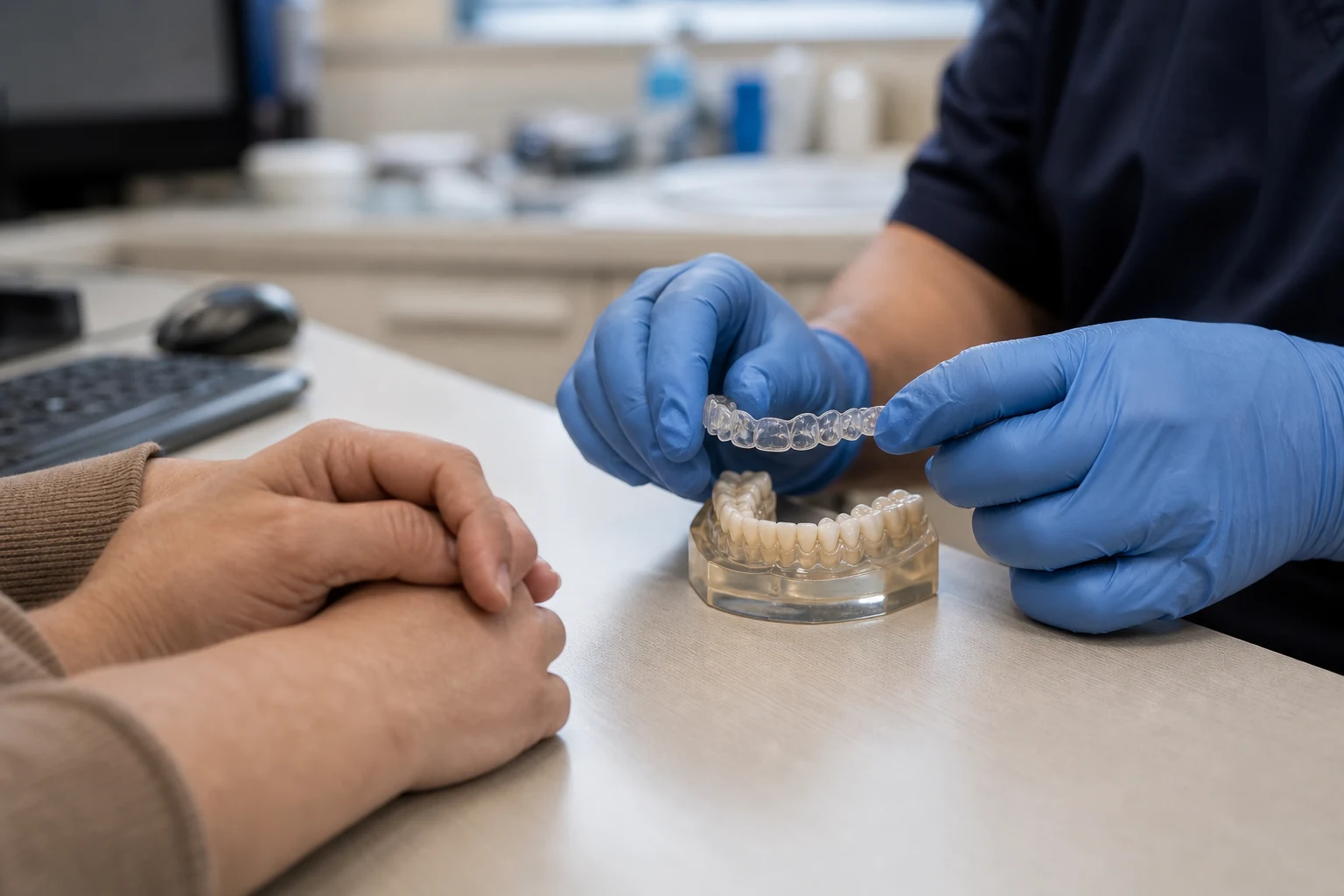
Clear aligners are removable trays designed to move teeth in planned stages. They need an orthodontic assessment, regular wear and retention after active treatment.
General information only. A dentist needs to examine you before advising whether a treatment is suitable.
In plain language
What it is
A sequence of custom trays applies controlled forces to the teeth. Aligners are one orthodontic option; fixed braces or no treatment may be more appropriate in some cases.
Read a little more
The plan must account for the teeth, gums, bite and jaw relationships, not appearance alone.
A general outline
What usually happens
This is a typical sequence, not a promise of how 4GSS will plan a particular case.
Assess
The clinician examines dental health and the bite and takes the records needed to judge whether aligners are suitable.
Plan and wear
A staged plan is discussed. If you proceed, trays are changed as prescribed and worn for the instructed time.
Review and retain
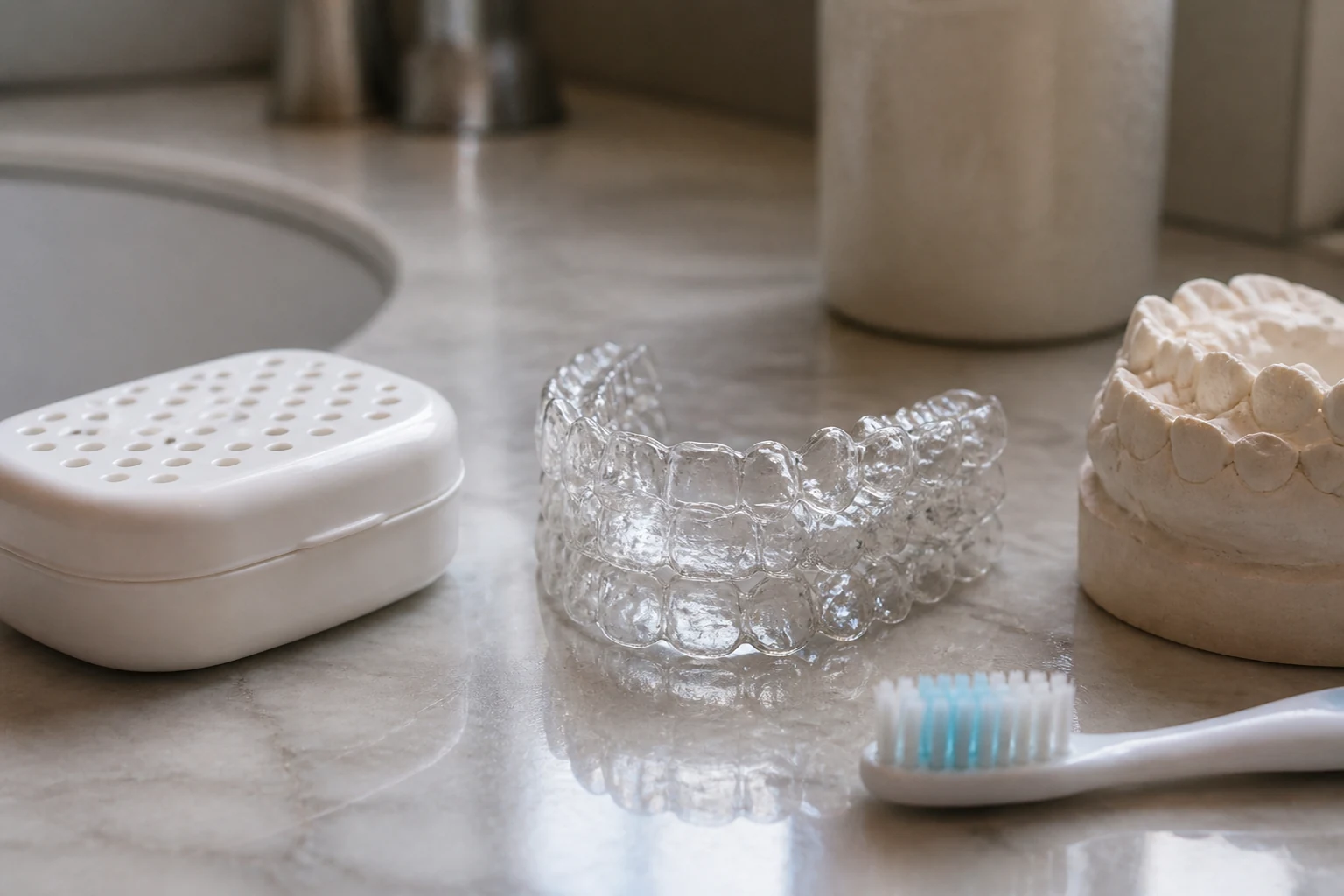
Progress is checked during treatment. Retainers are needed afterwards to reduce unwanted tooth movement.
More detail when you need it
Things to consider before deciding
Open any section that is useful to you. The dentist can talk through these points at an appointment.
Points to discussLimits, alternatives and uncertainties
Points to discuss
- Aligners need consistent wear and careful cleaning. Eating and drinking instructions vary by system.
- Teeth can feel tender as they move. Gum health and decay risk still need attention.
- The predicted digital setup is a plan, not a guarantee of the final result.
Questions to askThree useful prompts for your appointment
Questions to ask
- Why are aligners suitable for my bite?
- What happens if movement does not follow the plan?
- What retainers and long-term wear will be needed?
General information sourcesIndependent patient information
General information sources
These links explain treatments in general. They do not confirm which options 4GSS currently offers or what is appropriate for you.
Discuss this treatment with the practice
Request an assessment or call reception. The dentist can explain the findings, suitable options and current fees.